
Just by focusing on three simple chords — G major, A minor, and C major — you can effortlessly master Sabrina Carpenter’s “Manchild” on the piano. This guide breaks down the repetitive structure to help you develop strong hand coordination, timing, and expression without overwhelming complexity. With room to personalize through rhythm and dynamics, you’ll find this song both accessible and creatively rewarding. Whether you’re a beginner or looking to refine your skills, this easy-to-follow method will make your piano journey enjoyable and productive.
Choosing the Right Sheet Music for “Manchild”
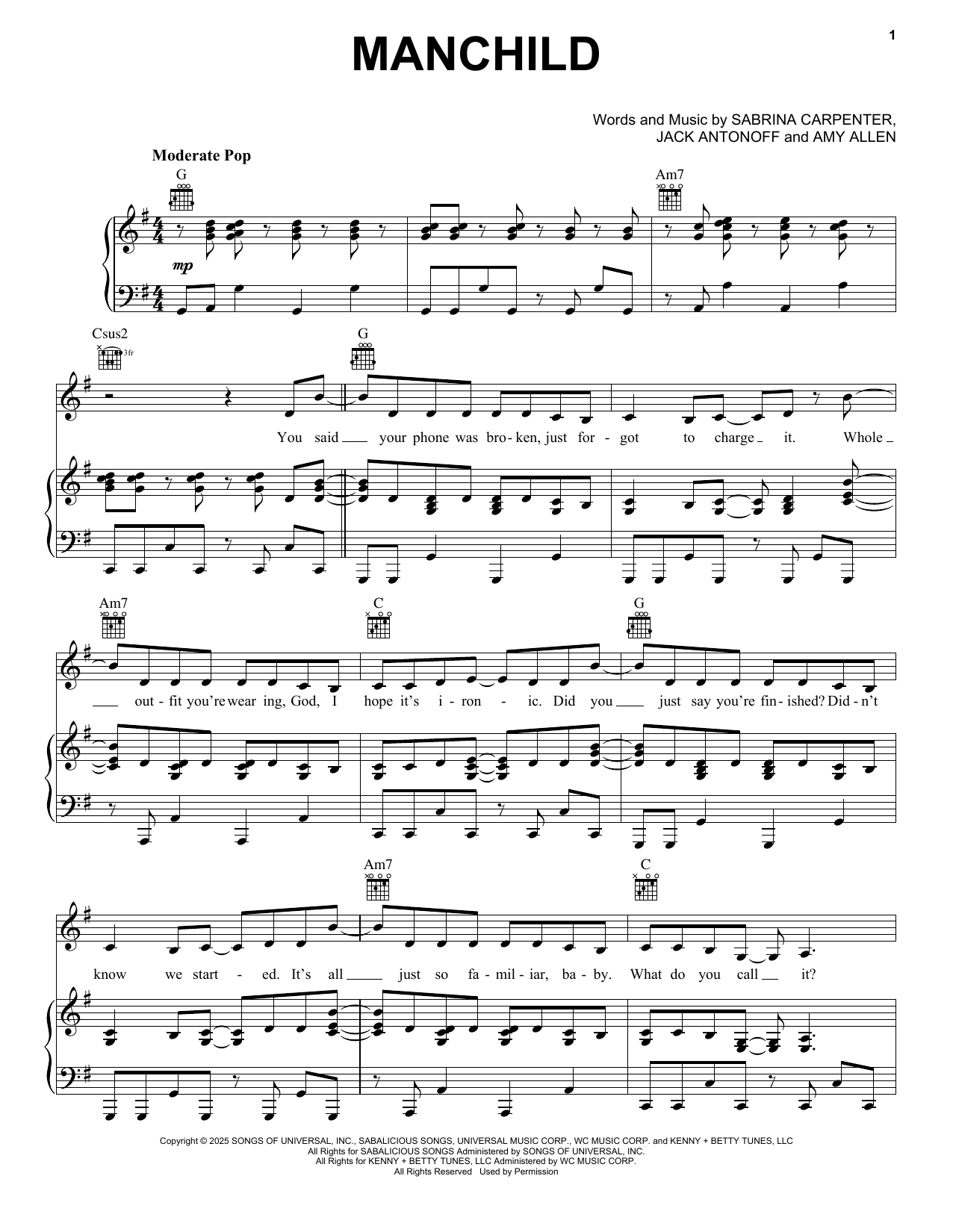
Finding the best sheet music for “Manchild” depends on your skill level and preferred learning style. Since the song revolves around just three chords, sheet music that emphasizes simplicity and clear chord symbols will help you build confidence quickly. Look for versions that include both standard notation and chord charts, allowing you to switch between reading the melody and focusing on chord progression. A good arrangement balances ease with enough detail to support your experimentation with dynamics and rhythm, ensuring your practice stays both productive and enjoyable.
Variations in Arrangements
Arrangements of “Manchild” vary widely, from very basic chord-centered leadsheets to more elaborate versions featuring melody lines and rhythmic notation. Some scores incorporate optional fills or arpeggios, while others stay strictly on one rhythm pattern. If you want to build creativity, choosing an arrangement with room for improvisation in the bridge or chorus sections can inspire you to add your personal touch. Different arrangements also cater to different skill levels, so picking one that matches your current abilities allows you to progress smoothly without frustration.
Digital vs. Printed Scores
Digital sheet music offers portability and interactive features like playback and adjustable tempo, which can greatly aid your learning process, especially with a song as repetitive as “Manchild.” Printed scores provide tactile feedback that some pianists prefer and the ability to annotate directly on the page. Choosing between digital and printed versions often comes down to how you like to practice; digital versions can be easier to carry and customize, while printed music helps solidify focus during your practice sessions.
Features such as looping tricky sections and tempo control can reinforce muscle memory. Conversely, printed sheet music allows you to physically mark fingerings or dynamic notes, aiding long-term retention. If you play in different environments—say, at lessons, home, or gigs—the flexibility of digital copies on tablets or phones can be a game changer, while printed copies may feel more reliable in settings without easy access to power or stable internet.
Download Licensed Digital Sheet Music
Mastering the Art of Practice
Focusing your efforts on deliberate, consistent practice will accelerate your progress with “Manchild.” Working through each chord change slowly before increasing tempo allows you to hone finger placement and timing. Incorporating small challenges, like adjusting dynamics or adding syncopation, enhances your overall musicality. By breaking the song into manageable sections—verse, chorus, and bridge—you create natural checkpoints to measure improvement and maintain motivation. Recognizing the balance between persistence and patience transforms practicing from a task into an enjoyable musical journey.
Key Tips for Effective Practice
Improving your hand coordination and timing on “Manchild” depends on purposeful strategies:
- Isolate the G major, A minor, and C major chords to build accuracy
- Use a metronome to maintain steady rhythm
- Slow down tricky passages before speeding up
- Experiment with dynamics and octave placement for expressiveness
Recognizing these tactics can transform routine practice into meaningful skill development.
Establishing a Routine for Consistency
Setting aside dedicated time—ideally 20 to 30 minutes daily—to practice “Manchild” embeds the song’s repetitive chord progression into muscle memory. Consistent sessions reinforce hand independence and timing precision faster than sporadic, lengthy rehearsals. Even brief warm-ups that focus on transitioning between the three chords will sharpen your fluency. Recognizing that regular, structured practice trumps occasional marathon sessions helps sustain motivation and steady progress.
Creating a structured routine involves scheduling practice at similar times every day, which builds a habit that becomes second nature. Starting each session with technical exercises targeting finger strength and flexibility preps you for the song’s demands. Tracking daily progress with a practice journal encourages reflection on areas needing improvement, such as rhythm or dynamic control. Recognizing the role of consistent, focused practice routines helps you not only master “Manchild” but also strengthens overall piano technique for future challenges.
Your Step-by-Step Roadmap to Playing “Manchild”
| Focus Areas | Recommended Approach |
| Chord Familiarity | Start by mastering the three chords G major, A minor, and C major individually before moving to transitions. |
| Timing and Rhythm | Practice with a metronome to lock in the song’s steady tempo and experiment with basic syncopation as you progress. |
| Expression | Incorporate dynamics like soft verses and louder chorus sections to enhance emotional delivery. |
| Creative Variation | Try octave shifts and rhythmic variations, especially in the bridge, to personalize your rendition. |
Breaking Down the Song Structure
“Manchild” revolves around a single loop of three chords repeated continuously, which means you can focus on perfecting smooth transitions while internalizing the chord shapes. The simplicity allows you to concentrate on consistent timing and expressive playing rather than juggling complicated changes, making it an ideal exercise to enhance coordination between your hands. The song’s repetitive nature gives you space to experiment gradually, like adding syncopation or altering dynamics, without losing the core rhythm.
Learning Through Tutorials and Resources
Numerous tutorials break down “Manchild” into manageable sections, offering video demos and sheet music that highlight fingering and timing. These resources often include slow-motion playthroughs and tips on adding personal flair, which help you go beyond just playing the chords and encourage expressive interpretation. Supplementary apps and interactive lessons can track your progress, making learning both structured and engaging.
 Platforms like YouTube feature performances by experienced pianists who not only demonstrate the core chord progression but also emphasize nuances such as hand positioning and dynamic contrasts in “Manchild.” Apps like Synthesia provide a visual representation of the notes, allowing you to practice both hands together at your own pace. Additionally, downloadable sheet music with annotated fingerings can serve as a reliable reference to reinforce muscle memory and timing precision as you build confidence with the piece.
Factors that Shape Your Musical Performance
Your rendition of “Manchild” hinges on several key elements that influence how the music comes alive beyond just hitting the right chords. Managing rhythm and dynamics ensures your playing doesn’t feel mechanical, while timing and the smooth transition between G major, A minor, and C major keep the flow engaging. Experimenting with octave shifts during the bridge, or introducing subtle syncopation, can transform a simple progression into a captivating performance.
- Chord consistency builds confidence
- Rhythm variations add interest
- Dynamic control shapes expression
- Octave and articulation personalize tone
This combination gives you the tools to make “Manchild” uniquely yours.
Emotional Delivery and Interpretation
With “Manchild”’s simple chord progression, emotional delivery drives the song’s impact. Emphasizing subtle changes in dynamics — softer verses and stronger choruses, for example — conveys vulnerability and growth. The repetitive structure allows you to layer feeling into each phrase, using slight hesitation or acceleration to mirror the song’s narrative tension. You can enhance storytelling by varying touch sensitivity and timing, making your interpretation resonate more deeply with listeners.
Technical Skills and Articulation
Mastering efficient hand coordination and precise articulation over the repeating G, Am, and C chords forms the technical backbone of “Manchild.” Practicing smooth transitions without breaking tempo builds fluidity, while experimenting with chord voicings—like playing arpeggios or alternating between blocked and rolled chords—adds texture. This technical foundation supports more advanced embellishments once you’re comfortable.
Digging deeper into technical skills, focus first on maintaining consistent timing while shifting between chords to avoid stiffness. Working on finger independence helps when adding syncopated rhythms or octave jumps during the bridge, which challenges your dexterity. Articulating each chord cleanly, whether staccato or legato, influences the song’s mood. Recording your practice sessions can reveal subtle inconsistencies and guide adjustments, sharpening your execution and reinforcing muscle memory for confident performances.
Evaluating Different Arrangements of “Manchild”
Exploring varied arrangements of “Manchild” reveals how adaptability can cater to your individual learning style and skill set. Simplified versions often focus on the core three chords, offering a straightforward path to building confidence and timing. In contrast, more complex arrangements incorporate ornamental fills, syncopation, and octave shifts, adding depth and challenge. Choosing which arrangement to tackle depends largely on your current proficiency and your desire for creative expression, as each version highlights different aspects of the song’s potential.
Pros and Cons of Simplified vs. Complex Versions
Breaking down the benefits and challenges of simplified and complex “Manchild” arrangements helps you decide which fits your goals best.
| Simplified Versions | Complex Versions |
|---|---|
| Easy to learn quickly | Encourages advanced technique development |
| Focuses on main chord progression | Includes intricate rhythms and dynamics |
| Builds foundational coordination | Enhances expressive playing skills |
| Less intimidating for beginners | More engaging for experienced players |
| Limited opportunities for creative variation | Requires greater practice time and patience |
| Can feel repetitive over time | May overwhelm if skills aren’t solid yet |
Finding the Right Fit for Your Skill Level
Choosing an arrangement that aligns with your skills makes learning “Manchild” both manageable and motivating. Beginners thrive by focusing on simplified versions centered around the three main chords, enabling steady progress in timing and hand coordination. Intermediate players often benefit from gradually introducing dynamics and rhythmic variations, shaping a more personalized interpretation without overcomplicating the foundation.
More experienced pianists can challenge themselves by embracing complex arrangements that incorporate syncopation, octave shifts, and layered textures, particularly through the bridge section. This approach not only refines technical prowess but also cultivates expressive nuance. Matching your arrangement choice to your current capabilities prevents frustration and keeps your practice sessions rewarding as you build toward mastery.
Manchild Sheet Music & Easy Piano Tutorial
A Deep Dive into “Manchild”: Analyzing the Song
Exploring Sabrina Carpenter’s “Manchild” reveals a carefully crafted balance between simplicity and emotional depth. The repetitive chord structure allows you to focus on the song’s expressive qualities, while the minimalist arrangement highlights its lyrical storytelling. This straightforward framework invites you to infuse your own style and interpretation, making the piece both approachable and rewarding to play.
Themes and Lyrics Breakdown
The lyrics in “Manchild” reflect themes of personal growth, vulnerability, and self-awareness, presenting an intimate narrative that resonates with many listeners. You’ll notice how the metaphor of a “manchild” captures the tension between maturity and immaturity, adding emotional weight that can influence your phrasing and dynamic choices on the piano.
Musical Elements and Chord Progressions
The entire song revolves around three chords—G major, A minor, and C major—played in a repeated sequence that provides a steady harmonic foundation. This unchanging progression encourages you to focus on timing, articulation, and emotional nuance rather than complex transitions, creating a perfect learning environment for honing your skills.
Diving deeper into the musical elements, the chord progression’s unvarying nature offers a canvas for rhythmic experimentation. For instance, integrating syncopated patterns or varying your touch from soft arpeggios to firm block chords can dramatically alter the piece’s mood. Octave shifts in the bridge introduce subtle yet effective contrast without adding harmonic complexity, giving you ample room to develop your expressive capabilities while maintaining the song’s accessible structure.
To wrap up
With these considerations, learning to play Sabrina Carpenter’s “Manchild” on piano becomes an achievable and enjoyable goal for you. By focusing on the three simple chords and consistent progression, you can build strong foundational skills in timing and coordination. As you gain confidence, feel free to explore variations in rhythm and dynamics to make your performance uniquely yours. This blend of simplicity and creative opportunity makes “Manchild” an excellent choice to enhance your piano playing journey without feeling overwhelmed.